

The Pricing Factors of Propane: Part 1
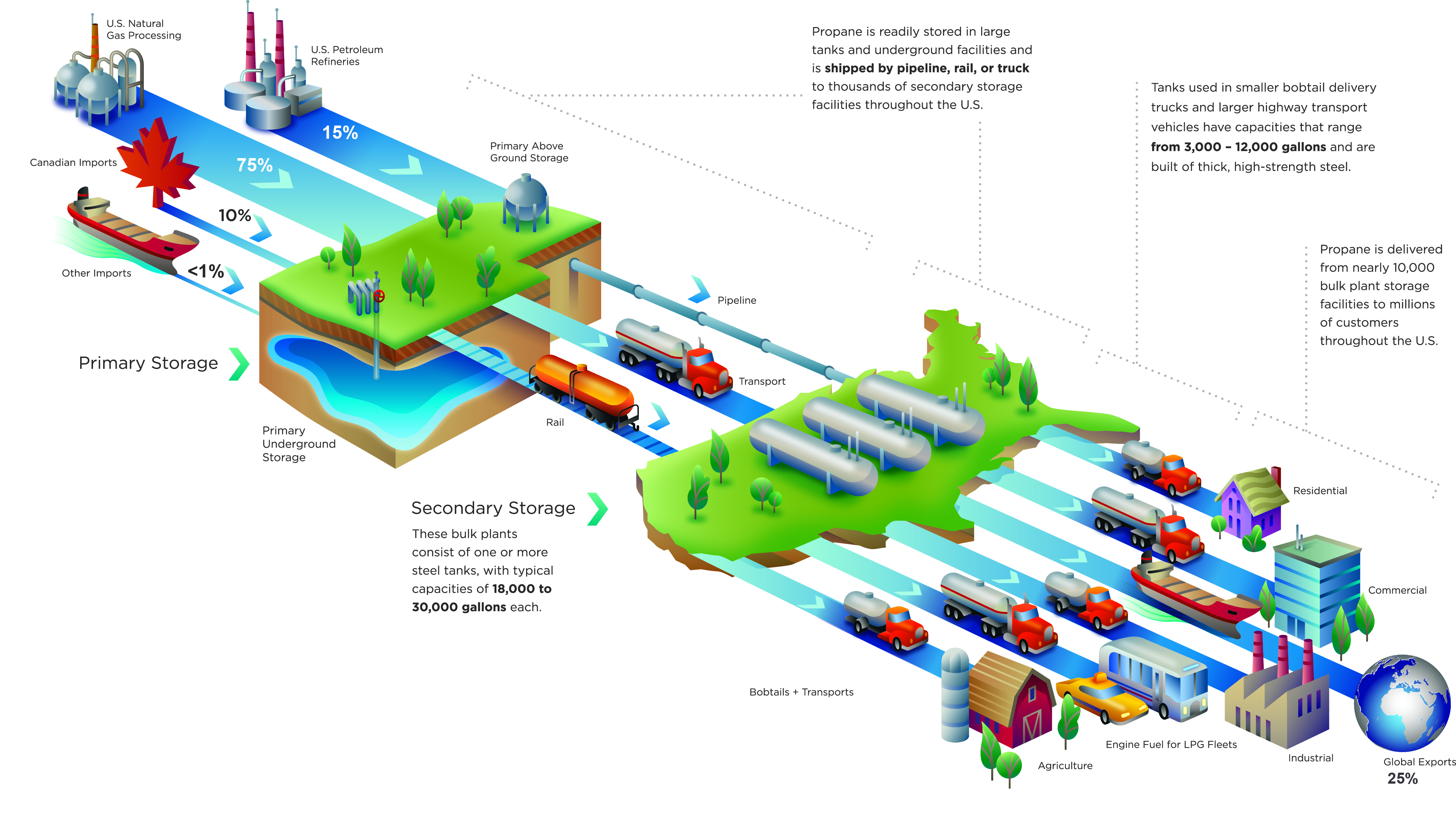
Ever wonder why propane costs what it does in Western New York? It’s a fair question, and the answer is more interesting than you might think. Before we get into pricing, it helps to understand where propane comes from and how it ends up in the tank in your yard.
Where Does Propane Come From?
Classified as a fossil fuel, propane gas is manufactured from two sources: natural gas processing and crude oil refining. It doesn’t just come out of the ground, ready to be put in storage tanks like the one in your yard.
It takes a lot of time and energy to produce propane, and here’s something most people don’t realize: no one processes natural gas or refines crude oil specifically to create propane. There are a multitude of other petrochemicals that are more valuable, in greater need, and more purposeful to our overall economy than propane. However, when those more valuable petrochemicals are manufactured, propane is created as a byproduct.
Today, domestic natural gas processing is the primary source of propane in the United States, and this is probably the most important aspect of propane production that most people do not understand. Natural gas, straight out of the ground, contains:
- Methane (95%)
- Small amounts of carbon dioxide
- Nitrogen
- Hydrogen sulfide
- In some cases, helium
Before it can be burned as a fuel used in manufacturing, it almost always has to be processed to remove impurities, such as water. The byproduct of this processing creates ethane, propane, butane, pentanes, and some of the higher molecular weight hydrocarbons mentioned above. All of those byproducts must have a purpose, and need to be stored, and eventually transported to processing plants to produce other products, such as various types of plastics.
A Brief History of Propane
Prior to 1912, when propane was first marketed to U.S. domestic customers, it was considered a “garbage gas,” because, as we mentioned, it’s a byproduct of the crude oil refining process. Kerosene was the dominant refined product being manufactured because it was a reliable and relatively inexpensive alternative to “coal-oils” used to fuel lamps.
The refineries were just flaring off this gas, discarding it, because they didn’t know what else to do with it, that is, until a couple ofsmart guys realized that this gas, which they would eventually call propane, could be captured and easily compressed into a liquid that could be safely stored in steel tanks and transported. It’s because of this portability that the domestic propane fuel market was born.
Fast forward 114 years and not much has changed. Propane, or Liquified Petroleum Gas (LP-Gas) is still considered the “poor cousin” of natural gas, and it’s still considered a byproduct in the manufacturing process, albeit it now has value attributed to it. But it exists, mainly, because it can be easily compressed into a liquid form, transferred into steel storage tanks, and safely transported by truck down our highways and byways to rural America, where natural gas just isn’t available.
Related Post: How Does Propane Add Value to Your NY Home?
What Drives Propane Pricing?
Like other petrochemicals you are familiar with, such as gasoline and diesel, there are two factors that determine the price per gallon that you pay your local propane provider: supply and demand.
Supply factors can be broken down into:
- Production and manufacturing costs
- Storage costs
- Transportation costs
Demand factors include:
- How and where the fuel is used (residential, commercial, agricultural, or industrial)
- Seasonal demand, especially when unexpected weather events create greater than average need in specific regions
Together, these factors mean propane prices can vary significantly by region.
Part 2: Coming Soon
In Part 2 of this series, we’ll discuss how the export market for propane has been putting additional pressure on demand over the past decade, and what factors determine the actual cost to you, as a consumer of propane, from the retail suppliers’ perspective.
Make the Switch with NORCO Propane
At NORCO Propane Energy Services, we deliver expert service and pricing options that make budgeting easier. If you’re ready to explore how propane can save you money and keep your home comfortable, contact us today to get started.