

The Pricing Factors of Propane: Part 2
[Author’s Note: The labels Liquified Petroleum Gas, LPG, LP-Gas, Autogas, BBQ gas, GPL (Europe), or product, all refer to the same thing, PROPANE, and these terms may be used interchangeably throughout this series of articles]
Did you know that the United States is the world’s largest producer of liquefied petroleum gas (LPG), or what we in the real world commonly refer to as propane? In 2024, the United States produced 111 million metric tonnes of propane, which is the equivalent of approximately 29.3 billion gallons. Globally, LPG supply increased by 11 million metric tonnes in 2024 to exceed 370 million metric tonnes. This was largely due to increased production in the U.S. As the world’s largest producer, the United States also happens to be the world’s largest exporter of propane, accounting for approximately 43% of all LPG exports.
In 2024, India, for the first time, overtook China to become the world’s largest residential LPG market at 27.8 million metric tonnes, larger than the residential LPG markets of Africa, the Middle East, Europe, and Eurasia combined. The entire Asia-Pacific region is projected to substantially increase propane usage through 2031, which is where the bulk of our domestically produced propane is exported.
This series of articles on The Pricing Factors of Propane is directed toward the general consumer of propane (our customers), not industry insiders, commodity traders, or market makers. It provides a simplistic overview from 30,000 feet for people who don’t care what arbitrage is, what differentials are, or what the Mont Belvieu or Conway indexes are all about. Instead, we’d simply like to explain some of the overall market factors that go into pricing your energy supply from a retail perspective. You probably don’t realize all the work and dedication that goes into this simple little molecule, C₃H₈.
Supply and Demand
How does all this factor into the price you pay for a gallon of propane? As a producer of propane, the United States manufactures much more propane than it needs domestically. We export approximately 65% of the propane we produce to international markets. These export markets tend to inflate the domestic cost of propane in a couple of ways. First, because the majority of the LPG produced in the United States is shipped overseas, there is less supply available for domestic use.
Second, and this may seem a little counterintuitive, if exporters do not have contractual commitments from foreign markets, manufacturers generally produce less propane, which also reduces the available domestic supply and artificially pushes prices higher because of product scarcity. It’s a balancing act, and it is unfortunate that as international markets become more profitable, producers often prioritize exports over domestic sales. Higher export demand drives up the cost of propane throughout the entire supply chain, both at the wholesale and retail levels, and eventually these higher prices are passed on to consumers.
Wholesale Midstream Market
Before NORCO can deliver propane to you, it first has to be delivered to us. The initial steps involve getting our product into one of the three storage facilities we operate. In total, we have approximately 138,000 gallons of storage capacity between our two locations in Springville and North Collins, New York. We can also draw from our wholesale storage facility, Niagara Energy, which we lease to our partners at AltaGas. This is where we obtain the majority of our propane.
AltaGas is a North American energy infrastructure company based in Calgary, Alberta, Canada. As a midstream marketer, the company moves propane from various supply points, in addition to its own production facilities on the West Coast of North America, by rail into our 365,000-gallon propane storage facility in North Collins, New York. Once the propane arrives in North Collins, we are able to purchase the millions of gallons we need to distribute to our customers throughout Western New York.
Transportation & Storage
For wholesale providers like AltaGas, transportation into facilities like ours can occur in a variety of ways. The primary methods of transportation are:
- Pipeline
- Boat or barge
- Rail car
- Truck
The key to propane is its portability. Using the appropriate mode of transportation, propane can be delivered almost anywhere, at almost any time. That portability has led to its tremendous success over the past century.
Within the industry, we think of propane as flowing like a river. After all, when it is under pressure and contained in a storage tank, it is transformed into a liquid, much like gasoline or diesel fuel. This segment of the market—from production and manufacturing to wholesale suppliers—is called the “midstream” market. Upstream includes refineries and gas plants. Downstream includes retail marketers and consumers. In some cases, depending on geographic location, propane can be transported directly from the refinery or gas plant to a local retail propane storage facility, bypassing wholesale storage and its associated costs. Keep in mind that every time a physical gallon of propane passes through another storage tank, another layer of cost is added until it finally ends up in your tank, where it is burned as fuel.
Other Cost Factors
At NORCO Propane Energy Services, our most important job is making sure you never run out of propane. Aside from the wholesale price of the product itself, what are some of the other costs associated with providing this service? Remember, all of the cost centers and overhead expenses we’re about to discuss are built into the price you pay for every gallon of propane.
First, let’s talk about our fleet of trucks. We currently operate seven bobtail trucks that perform all of our residential and commercial propane deliveries. If we had to replace just one of these trucks today, it would cost more than $200,000. In addition to our bobtails, we also have three dedicated service vehicles that handle tank installations and removals while supporting our service department as technicians travel from home to home installing and repairing heating and cooking appliances to keep your home and community safe. We also operate five semi-trucks and transport trailers that keep our bulk propane storage plants supplied year-round. All of these vehicles require trained personnel to operate and maintain them.
We have a staff of six mechanics in our truck shop whose job is to keep all of these vehicles on the road. Along with our shop personnel, we employ up to 12 full-time drivers during the peak winter heating season. Each of these employees receives a competitive wage, health insurance, paid vacation, and retirement and other employee benefits.
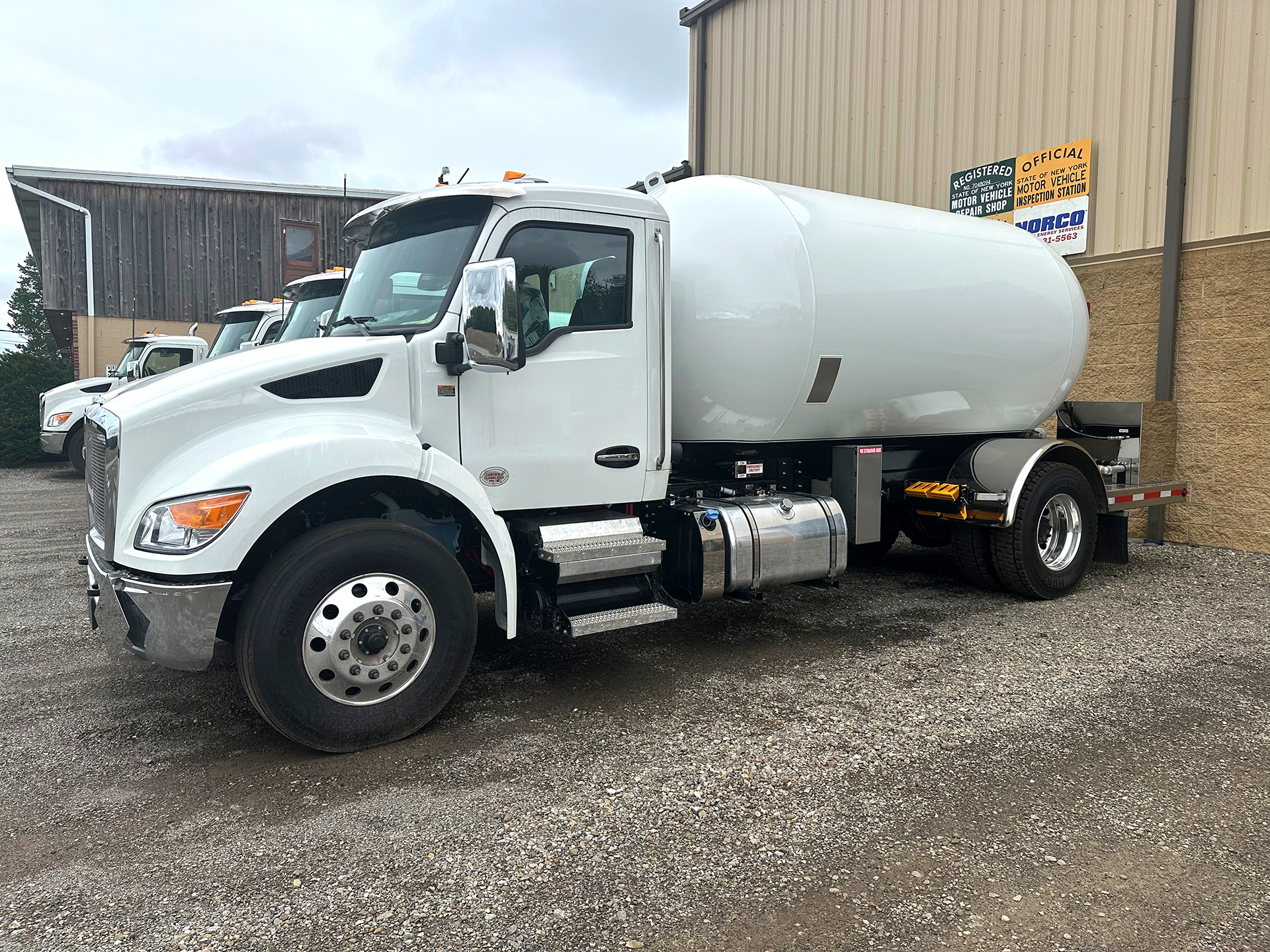
Propane Bobtail
Part 3: Coming Soon
In our next installment of this series, we’re going to take a closer look at the concepts of allocation, and offering our customer a “fixed” or a “locked in” price per gallon.
Make the Switch to NORCO Propane.
NORCO is your propane leader in Western New York. Give us a call, or drop us an E-Mail through the “Contact Us” link above for your various service options. We deliver expert service and pricing options that make budgeting easier.